Remembering Rodney Malham
Written by Ian McKechnie
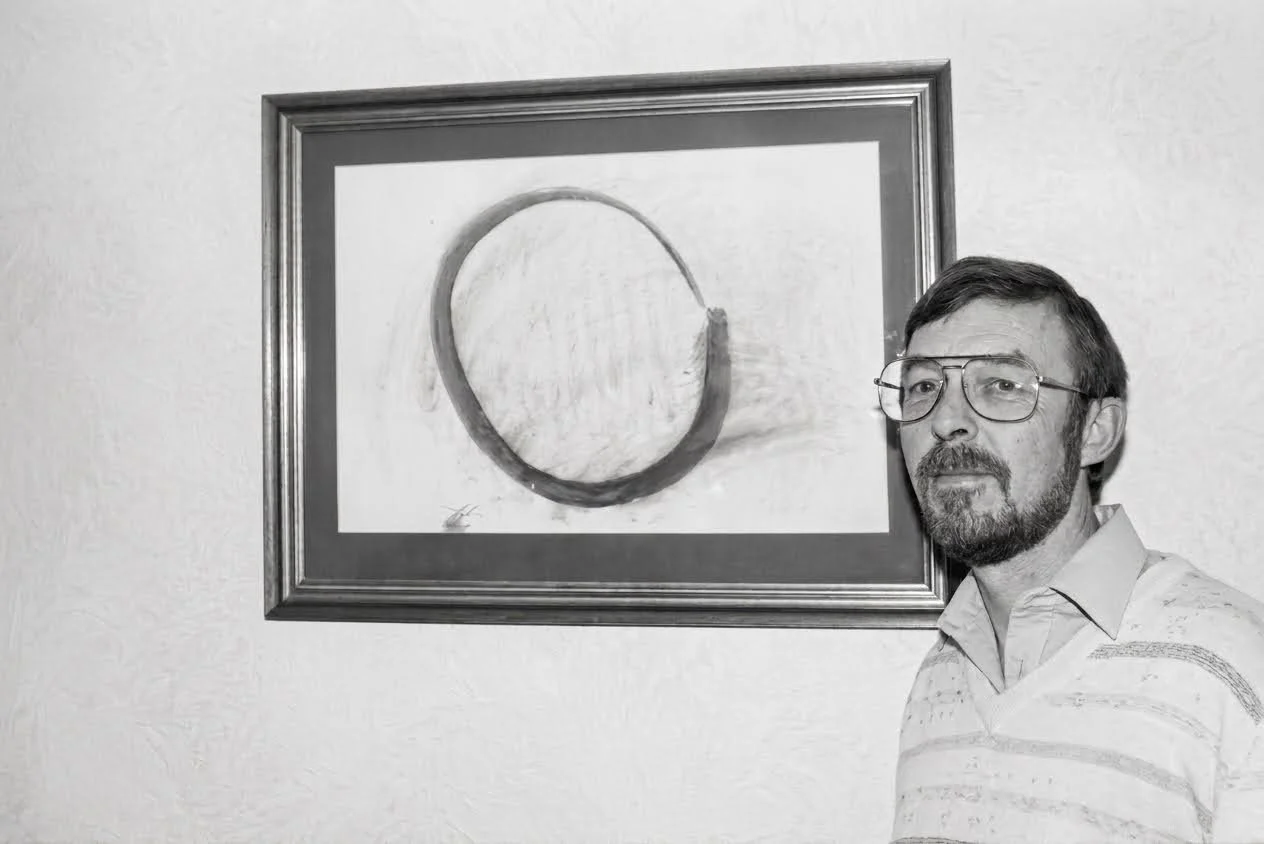
Residents of Lindsay and surrounding area opening the Lindsay Daily Post in the latter part of the 1980s would have become familiar with Rod Malham's face. Bespectacled and bearded – and often dressed impeccably in a suit and tie – the late Mr. Malham resembled the archetypal curator, or perhaps university professor.
It was 40 years ago this summer that Malham began his tenure as The Lindsay Gallery's fifth director (a role that had been a paid position since 1978). And it seems fitting during this 50th anniversary year to reflect on what made things tick back then – and what role Malham played in making the Gallery a going concern in the local cultural community.
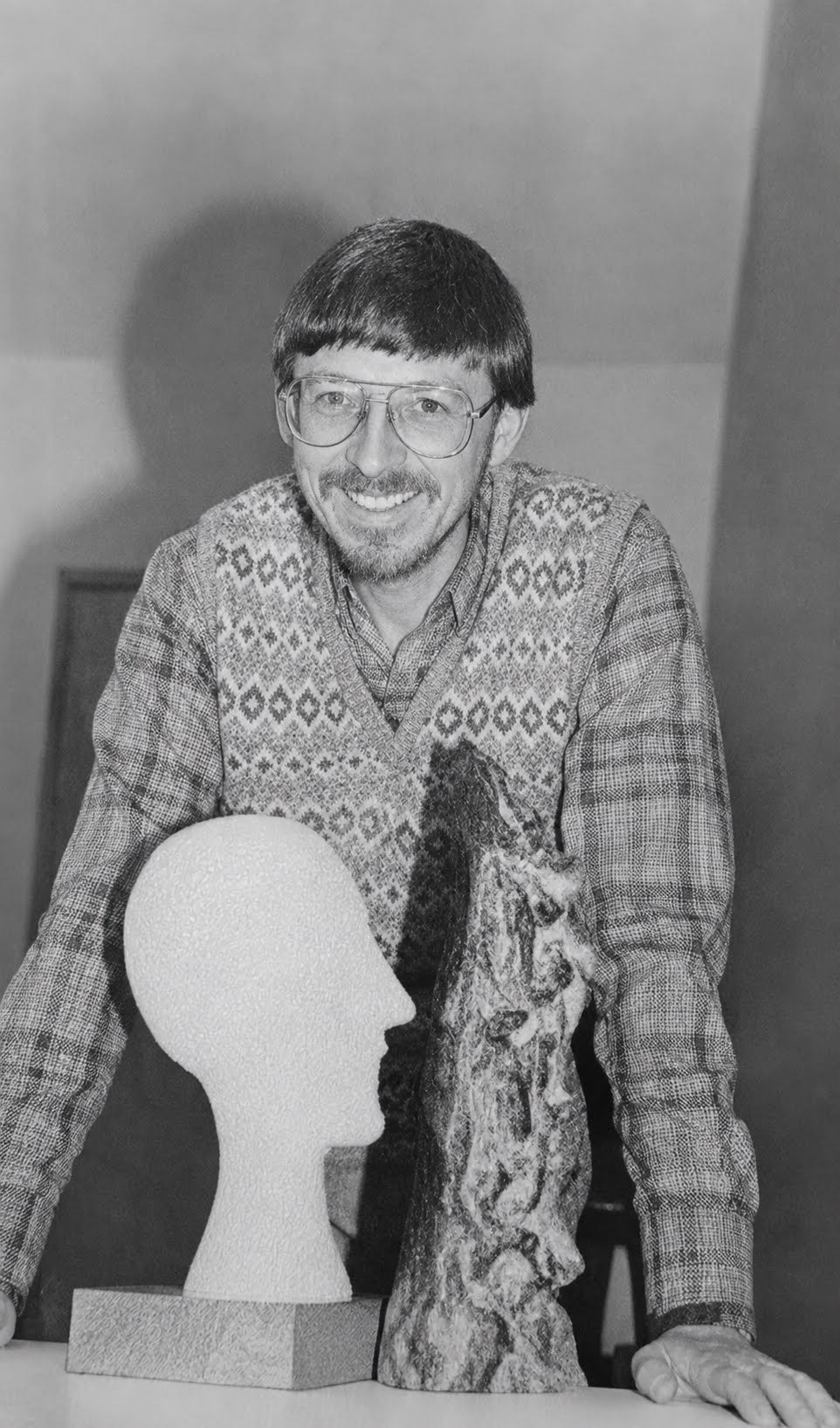
Rod Malham, 1982 Studio Tour (Hurst)
Unlike Michael Burtch and Maureen Bell, both of whom relocated to the area upon their being appointed as Director in 1978 and 1981, respectively, Rodney Malham was already a resident of town and active in the local art scene when he was hired in mid-July of 1986. (One of the earliest references to him in a Gallery context appears in a 1982 article about the Gallery's inaugural studio tour. "Artist Rod Malham says that he's currently exploring a wide range of subjects," wrote journalist Alan Hurst in a caption beneath a picture of the smiling Mr. Malham. "Visitors to his studio will see sculpture, watercolors and drawings.")
Born in circa 1943, and a graduate of the Ontario College of Art and Design, Rod Malham's reputation as a multidisciplinary artist surely impressed those tasked with hiring a successor to Audrey Maclean, who had been the incumbent since 1984. He was also a visionary who sought to transform The Lindsay Gallery from being merely a space in which established artists could hang their work to being a community hub in which artists of any skill level might learn from each other. In this sense, Malham stood in the tradition of his predecessors – particularly Maureen Bell, whose background in educational programming led the Gallery to distribute educational kits to local schools.
But his plans for the Gallery went beyond merely educational outreach into what we today call networking. "There are artists and craftspeople out there in the county who get isolated because they are constantly working on their own, which is the nature of artists," Malham told Alan Hurst in an interview that appeared in the July 30, 1986, edition of the Post. "But you do need other ideas and input and interaction and that's something we can offer."
This perhaps marked the start of the Gallery's role as a leader in fostering collaboration among those in the local cultural sector – something it would continue to do well into the 2010s and beyond. "I'd like to see the gallery as more of a resource for local artists. There is lots of information that doesn't get to the artists and we can help with that," Malham continued. "I want them to feel comfortable about coming into the gallery."
This last comment is especially crucial. Why might people not feel comfortable about venturing into The Lindsay Gallery – or any gallery, for that matter?
As noted in the April installment of Gallery Stories, some saw the Gallery's role as being one of "developing a public which can exercise sound judgement in matters of taste," as though incubating connoisseurs of fine art was the name of the game. (This was an image Mr. Burtch had been keen to distance himself from, telling a reporter in 1978 that "I don't want the idea that an art gallery is for the elite, to persist." Ironically, though, some interpretive materials developed during his tenure – particularly for an exhibition of John Howlin's abstract work in 1979 – were clearly geared towards specialists, rather than the general population.) Malham actively sought to dispel this myth of elitism. "I want this to be seen as a viable cultural entity in the community, which means that we have to attract younger people to the gallery as well as more volunteers," he told Hurst in that 1986 interview.
That did not mean that the works of the great Canadian masters were excluded. Rather, they were made more accessible.
One of Malham's first initiatives was the development of an exhibition in which members of the community were invited to share artworks they had collected over the years. To Malham, this would allow the public to see firsthand contemporary and historical works that they might not otherwise have an opportunity to view unless they travelled elsewhere. "I have to be aware of the community and its needs and what it wants from this gallery," Malham explained to Post reporter Lynne Betts in 1987. "We are here to give the community exhibits that fulfill their needs but also challenge them."
Malham also sought to build relationships with the local heritage community, something that was at the heart of 1988's A Visual History of Victoria County. To bring this exhibit to fruition, Malham reached out to the Victoria County Historical Society, the Lindsay Public Library, and others in the area who could supply him with stories, images, and artefacts for display in the Ethel Flavelle Gallery.
Also happening during Malham's tenure was an annual art auction that raised money for the Gallery. "The gallery is the cultural cornerstone of this community," he told a Post reporter in 1989. "Local artists rely on it for support and now they're helping it."
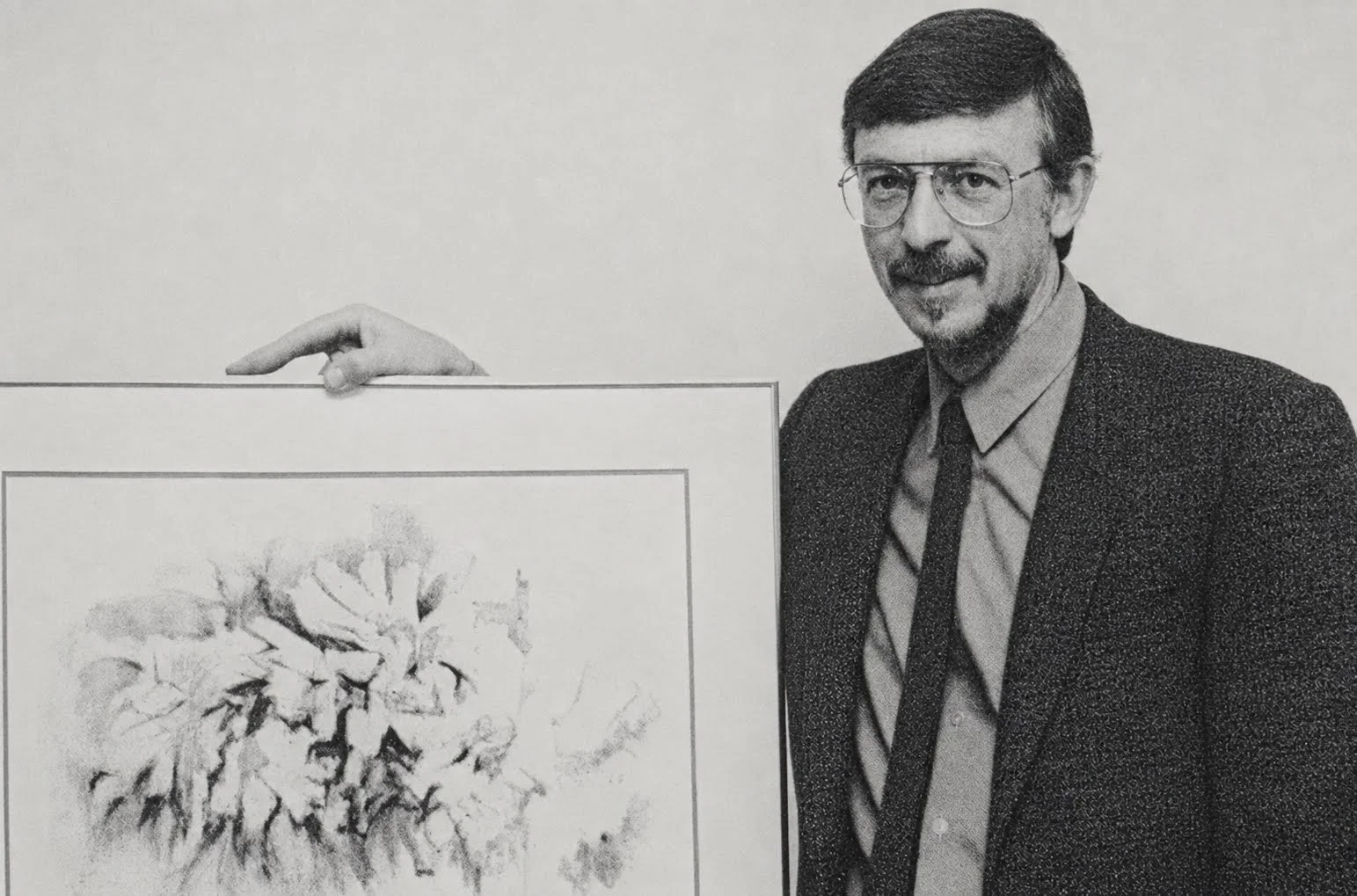
Rod Malham, 1989 Art Auction (Byrr)
Although the Gallery supported artists via the networking and outreach initiatives Malham and his colleagues spearheaded, it could not rely merely on the philanthropic goodwill of artists and others in the community. It also required ongoing public funding in the form of support from the Town Council – and the frustration Malham faced in trying to secure this support for the long term would ultimately prove to be his undoing.
As explained in the June 2026 installment of Gallery Stories, Malham had been serving as chair of the local Cultural Committee since 1988. Its efforts to realize a cultural centre in the vacant Shaft Machine building were dashed when, in 1990, consultants hired to oversee a feasibility study noted that – among other things – investing in arts, culture, and heritage was simply not a priority for the Town of Lindsay. Two years later, council vetoed a request from the committee Malham chaired to invest $70,000 in developing culture in the community. This, coupled with a $35,000 deficit at the Gallery that occurred because of fundraising efforts that failed to pan out as expected, led Rod Malham to throw in the towel. He resigned on April 15, 1992, and left his post at the end of the following month.
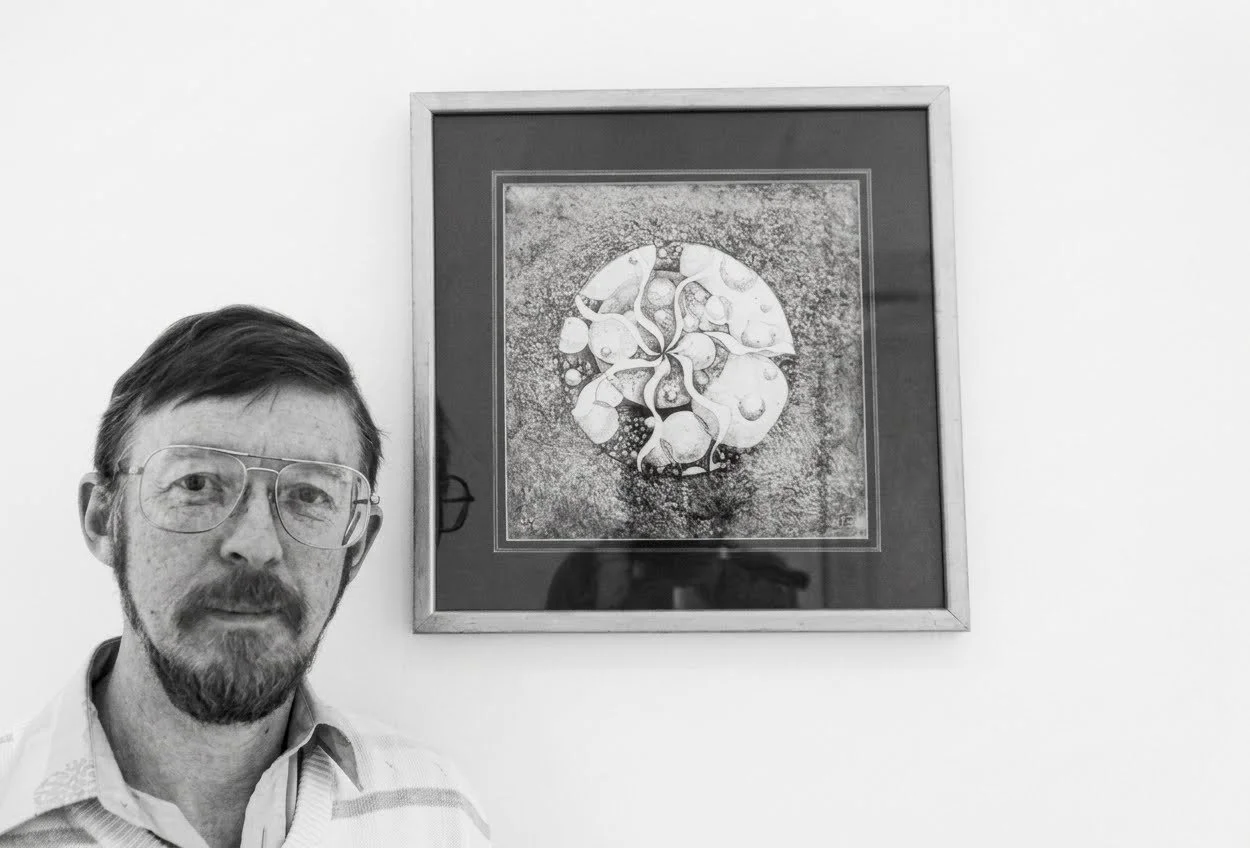
Malham eventually relocated to Victoria, British Columbia, where he remained active as an artist and a landscape designer well into the 21st century. He also dabbled in consulting on questions of sustainable food production. Malham was active in the Victoria visual arts scene through at least 2014, and died sometime after that.
For those who frequented The Lindsay Gallery between 1986 and 1992, though, Rodney Malham would be best remembered as the dapper gentleman who sought to expand its reach and leave a lasting imprint on the cultural landscape of Lindsay. More than 30 years after the fact, his desire to see more municipal support for culture has by and large been realized – enabling the Gallery to plan for an exciting future.
Every month, join Research Associate Ian McKechnie as he opens the doors to Kawartha Art Gallery’s archives, sharing the remarkable history and the dedicated individuals who made the City of Kawartha Lakes only public Art Gallery with a Permanent Collection a reality.