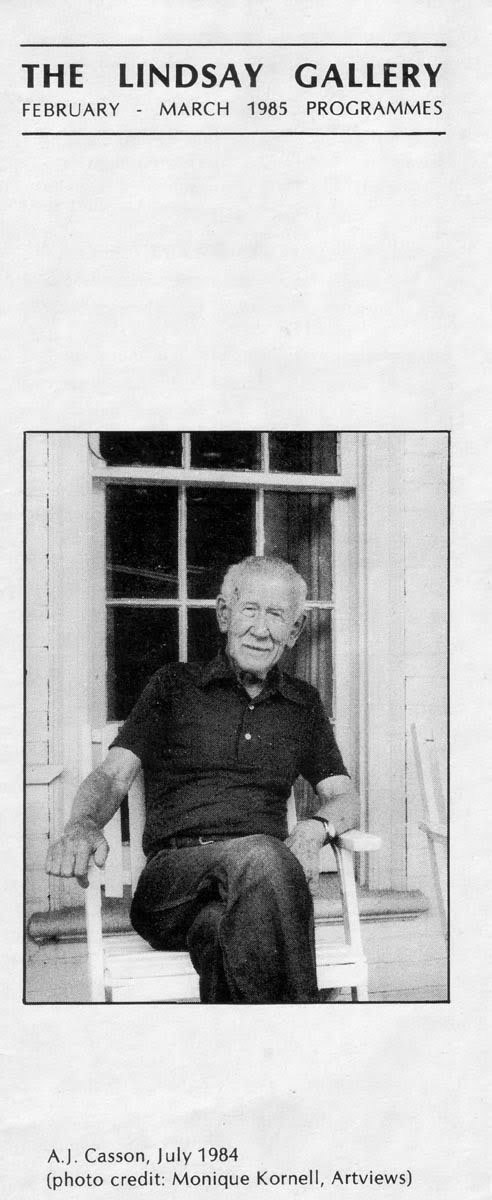
If you've ever stood in front of a painting of a quiet Ontario village, with white clapboard churches, birch trees catching afternoon light, and a sky impossibly still, you may have been looking at the world through A.J. Casson's eyes.
Alfred Joseph Casson (1898–1992) was the youngest and last member to join Canada's legendary Group of Seven, the collective of landscape painters who fundamentally changed how Canadians see their own land. While fellow members like Tom Thomson and Lawren Harris are household names, Casson remains a hidden gem: quietly influential, deeply Canadian, and deeply connected to the rural Ontario landscape that surrounds us here in the City of Kawartha Lakes.
Whether you're new to Canadian art history or a longtime admirer, here's your introduction to one of our most beloved national painters.
Who Was the Group of Seven?
Before we get to Casson himself, a quick primer. The Group of Seven was a collective of Canadian landscape painters, formally established in 1920, who set out to create a distinctly Canadian style of art. Their work embraced the rugged wilderness, the cold light, and the dramatic seasons of this country rather than mimicking European traditions.
The founding members included J.E.H. MacDonald, Lawren Harris, Arthur Lismer, Frederick Varley, Frank Johnston, Franklin Carmichael, and A.Y. Jackson. Together they painted the Algonquin wilderness, the Canadian Shield, and the windswept coasts of Georgian Bay. They were bold, post-impressionist in style, and unapologetically in love with Canada.
When Frank Johnston left the group in 1921, a door opened for a young commercial artist who had been quietly painting alongside them for years.
From Apprentice to Artist: Casson's Early Life
Born in Toronto in 1898, Casson showed artistic promise from childhood. His teacher at Hamilton Technical School reportedly had him teach art to his own classmates because his skill already surpassed hers. His father sent him to work at age 15 as an apprentice at a Hamilton lithography company. In 1915, the family moved back to Toronto where his art classes were private lessons where he learned about colour and how to use oils and watercolour, a medium he loved. At the same time as working, he attended evening classes at Central Technical School.
Done in 1917, possibly these three images were part of Casson’s first public exhibition held in 1917 at the Canadian National Exhibition.
https://www.kawarthagallery.com/permanent-collection/nudes-trio-1917
The turning point for Casson came in 1919 when Casson joined the commercial art firm Rous and Mann, where he became the apprentice of Franklin Carmichael, a founding Group of Seven member. Carmichael took Casson sketching, introduced him to the other artists at Toronto's Arts and Letters Club, and became a lasting influence on his development as a painter.
By 1926, Casson was formally invited to join the Group of Seven. At just 28 years old, he was its youngest and final member.
What Made Casson's Art Unique?
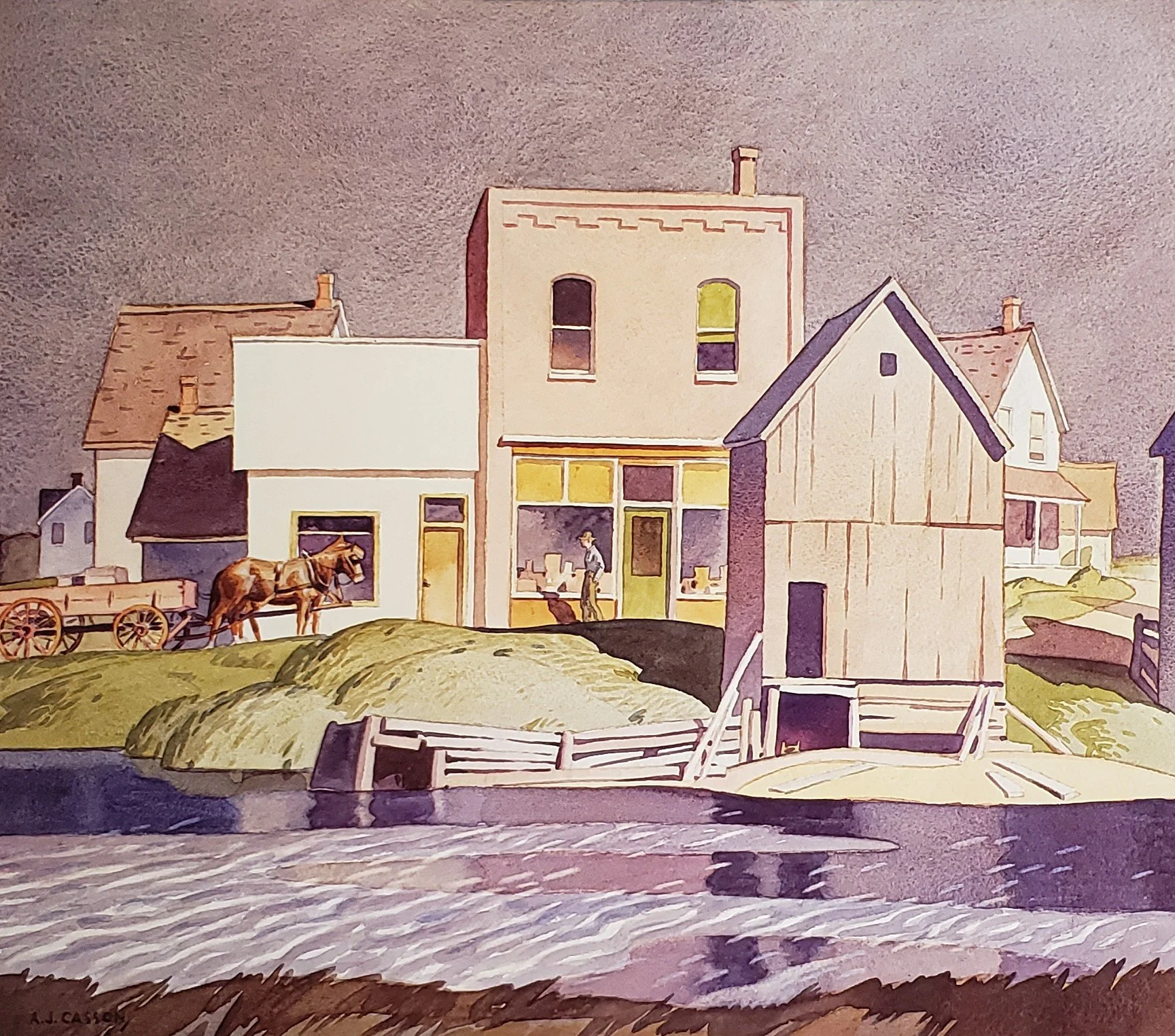
While his fellow Group of Seven members were drawn to the dramatic wilderness of the Canadian Shield, Casson carved out his own corner of the Canadian landscape: the small towns and rural communities of southern Ontario.
He became known for painting villages with an almost architectural clarity: wooden churches, quiet main streets, and sky-heavy horizons rendered with clear colours, simplified forms, and carefully composed backgrounds. His style was shaped by his years in commercial art and design. As Lawren Harris had advised him: simplify and eliminate all nonessentials.
Casson was also an exceptional watercolourist. In 1925, he co-founded the Canadian Society of Painters in Water Colour with Carmichael and F.H. Brigden, helping revive serious interest in the medium. His watercolours capture a stillness and quiet that feels almost meditative, a quality the National Gallery of Canada noted can seem quietly ominous.
Casson himself described the feeling he aimed for: "It's like when you're out and it's been snowing. It's quieter than quiet." (A. J. Casson)
A Life Split Between Commerce and Canvas
One of the most remarkable things about Casson's artistic output is that most of it was produced in his spare time. For over three decades, he worked full-time at the commercial art firm Sampson-Matthews, eventually rising to Vice-President and Art Director. Painting happened evenings, weekends, and on sketching trips.
He retired from Sampson-Matthews in 1957, at age 60, and finally had the freedom to paint full-time. He continued painting prolifically until late in life, and in a fitting final chapter, lent his expertise to the Ontario Provincial Police as a consultant helping to identify forgeries of Tom Thomson and other Group of Seven works.
A.J. Casson passed away on February 20, 1992, just three months before his 94th birthday. He is buried on the grounds of the McMichael Canadian Art Collection in Kleinburg, Ontario, alongside six other members of the Group of Seven.
Why Casson's Legacy Matters Here in Kawartha Lakes
Casson's subject matter is not abstract to us. Small Ontario towns, farmland, rolling forests, light falling across a quiet countryside: this is the world we live in.
The City of Kawartha Lakes sits at the heart of the rural Ontario that Casson spent his career celebrating. The lakes, the birch stands, the weathered barns and country churches he rendered in paint are a living part of this landscape. His work isn't just Canadian art history. It's a mirror held up to our own backyard.
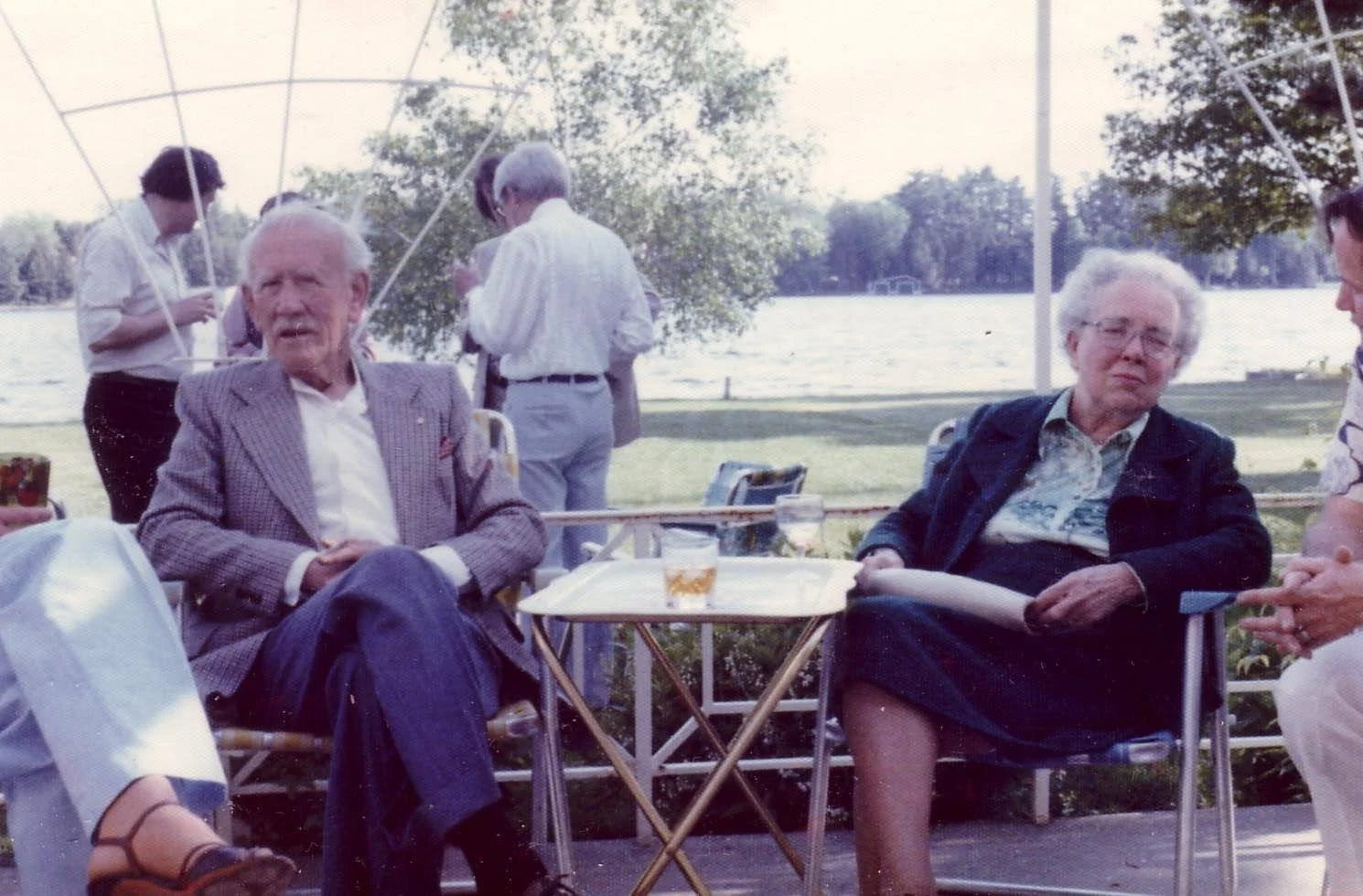
A.J. Casson and J.E.H MacDonald of the Group of Seven both visited and spent time painting in the Kawarthas. As an accomplished calligrapher, Casson excelled in streamlined design, and loved pattern.
“I had to develop my own style. I began to dig out places of my own... I loved to paint villages, and I'm glad, because they're pretty much gone now. They've all changed, fallen down or been destroyed.” (A. J. Casson)
“In 1934, Bobcaygeon was the commercial centre of the local farming community. My wife and I rented a cottage for a week near the town and I completed a number of watercolour sketches. I was attracted by the boathouse and general store located on the river front and the sense of tranquility on that autumn day.” (A. J. Casson)
Visiting Lindsay, Bobcaygeon, and Coboconk spending time along the banks of the Gull River, Casson and MacDonald, each through their own individual style, left an indelible footprint of their vision of the Kawarthas.
Kawartha Art Gallery believes in the power of art to connect people to place, history, and one another. Casson's conviction that the ordinary landscape of Ontario deserves to be seen, studied, and celebrated is one we share. It's also what draws artists and visitors to this region today, decade after decade.
Casson at Kawartha: Six Works in Permanent Collection
Here's something that might surprise you: you don't need to travel to the McMichael or the AGO to see A.J. Casson's work. Kawartha Art Gallery is proud to hold six works by Casson in the Permanent Collection, a rare and significant holding for a small public art gallery.
These pieces are part of a collection built over more than four decades through the generosity of donors, collectors, and the dedication of the Gallery's founders. They represent not just artistic treasures, but a living record of this community's commitment to preserving Canadian visual culture.
Explore the Gallery’s Permanent Collection to learn more about the works the Gallery stewards on behalf of this community.
Help Preserve These Works for Future Generations
Stewardship of a Casson, or any significant work in a Gallery's Permanent Collection, comes with real responsibility. Paintings age. They require conservation, careful storage, and ongoing care to survive for future generations.
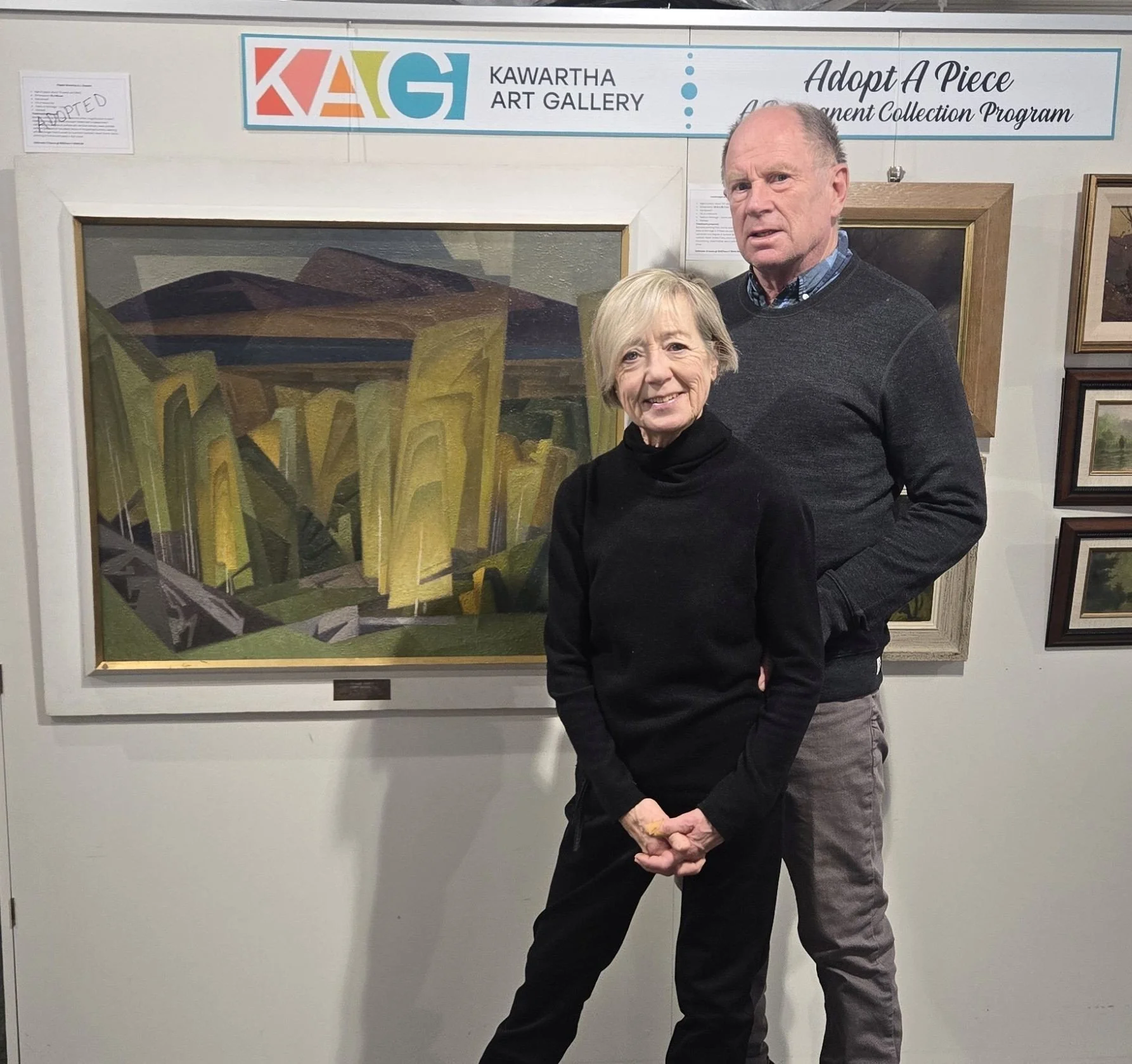
That's exactly why the Gallery created the Adopt a Piece program. Through this initiative, community members can directly support the conservation and restoration of works in the Permanent Collection, including pieces like the Casson holdings. It's one of the most tangible ways to ensure that this piece of Canadian art history stays right here in Kawartha Lakes, well cared for and accessible to all.
In December 2025 Jamie & Glenda Morris adopted A.J. Casson’s piece Poplar Grove to go in for conservation work. Watch for the return of Poplar Grove to the Gallery at the end of April 2026, in a special presentation exhibit.
Learn more about Adopt a Piece and how you can help protect the art that defines our community.
When you adopt an artwork, you are supporting its conservation and care, you do not purchase or own the piece.
Come See Casson in Person
You don't have to travel to a major city to experience one of Canada's great painters. Kawartha Art Gallery is currently located on the second floor of the Lindsay Public Library at Kent Street West, Lindsay, and we're always happy to welcome the whole community.
Whether you're an art lover, a curious first-time visitor, or someone who grew up with these landscapes and wants to see them through a master's eyes, you are welcome to visit the Gallery, Tuesday to Saturday from 10am to 4pm. Admission is free.
Explore our Permanent Collection, support our Adopt a Piece program, or plan your visit at kawarthaartgallery.com. For the art in everyone.