Your Brain on Art: Why the Science of Neuroarts Makes Our Work More Essential Than Ever
Science has long confirmed what artists and gallery-goers intuitively know: engaging with art doesn't just move us emotionally. It physically changes our brains. At the Kawartha Art Gallery, that science plays out in every program the Gallery offers. So what happens when the funding that makes it all possible starts to disappear?
We Are Wired for Art
There is a growing field of science dedicated to understanding what happens inside the human body when we engage with art. It is called neuroarts: the study of how artistic and aesthetic experiences measurably change the brain, the body, and our behaviour.
Using brain imaging and biological measurement tools, researchers are discovering that when we make art, watch a performance, listen to music, or even simply stand in a gallery in front of a painting that stops us in our tracks, our brains don't just process the experience passively. They are actively being shaped by it.
Neural pathways are rewired. Stress hormones drop. New connections form. The brain's capacity for empathy, creativity, and resilience grows. And the effects are not fleeting. They accumulate over a lifetime.
This isn't soft language or wishful thinking. It is peer-reviewed science, and it is transforming how governments, healthcare systems, and educators around the world think about the role of the arts in human wellbeing.
What the Research Tells Us
Some of the most compelling findings from neuroarts research include:
FOR CHILDREN AND YOUTH
→ Arts education supports emotional resilience in children and adolescents as they learn, helping them cope with stress, regulate emotions, and build empathy.
→ Children involved in high-quality arts programs show significant improvements in behaviour, emotional regulation, and conflict resolution, findings supported by a multi-site Canadian study conducted over three years.
→ Learning a musical instrument is linked to stronger neural connectivity between brain hemispheres, with measurable benefits for verbal ability and motor learning.
FOR ADULTS AND OLDER ADULTS
→ Just 45 minutes of creative activity can significantly reduce cortisol (the body's primary stress hormone), regardless of artistic skill or experience.
→ Regular arts engagement is linked to reduced rates of cognitive decline and improved mood, communication, and flexibility in older adults, including those living with Alzheimer's disease.
→ Community-based arts programs run by professional artists have shown "powerful positive intervention effects" for disease prevention and increased independence among seniors.
→ Countries including Canada, the UK, and several European nations are now trialling social prescriptions, where doctors prescribe museum visits and arts participation, to address loneliness, depression, and isolation.
FOR COMMUNITIES
→ Canada's arts and culture sector contributed $65 billion to the national economy in 2024, and every dollar of federal arts investment generates an estimated $29 in economic activity.
→ Ontario's culture sector contributed $26.4 billion to provincial GDP, with OAC-funded organizations alone generating $1.1 billion in GDP in a single fiscal year.
→ The arts build more equitable, connected communities, reducing social isolation, building bridges across generations, and fostering belonging.
Sources: Your Brain on Art (Magsamen & Ross, 2023); NeuroArts Blueprint (Johns Hopkins / Aspen Institute); National Endowment for the Arts; Canadian Chamber of Commerce, 2025; Ontario Arts Council Impact Report, 2025.
What This Looks Like at Kawartha Art Gallery
For years, long before "neuroarts" entered the popular vocabulary, Kawartha Art Gallery has been doing exactly what the science now describes. The Gallery’s programming isn't just culturally valuable. It is, in the truest sense, a public health resource for this community.
Consider what the Gallery offers:
Weekly creative art program for youth gives children a consistent, supported space to make things with their hands, express what they're feeling, and build the kind of emotional toolkit that research shows will serve them for the rest of their lives. Arts engagement in childhood isn't a nice-to-have. It's a neurological investment.
A monthly music series that does more than entertain. Live musical experience activates the brain's reward and emotional systems in ways that recorded music often cannot. It builds community in real time: the shared attention, the collective response, the brief and powerful reminder that we are not alone.
School programming that extends the Gallery's reach into classrooms, bringing students into contact with original works of art through guided tours, hands-on workshops, and curriculum-linked activities. Research consistently shows that arts-integrated learning improves attention, retention, and academic performance.
Adult art programming and artist meetups that create what researchers describe as "group effect": the neurological and social benefits that come specifically from making and experiencing art together, rather than alone. Community is the variable that amplifies everything else.
And perhaps most profoundly, the Gallery’s Seniors for Seniors program, which brings practicing senior artists directly into long-term care homes, is an act of neuroarts in its purest form. The artists who visit bring more than their work. They bring stimulation, connection, purpose, and the kind of creative energy that research shows can slow cognitive decline and restore a sense of identity and dignity to people who are often in profoundly isolating circumstances.
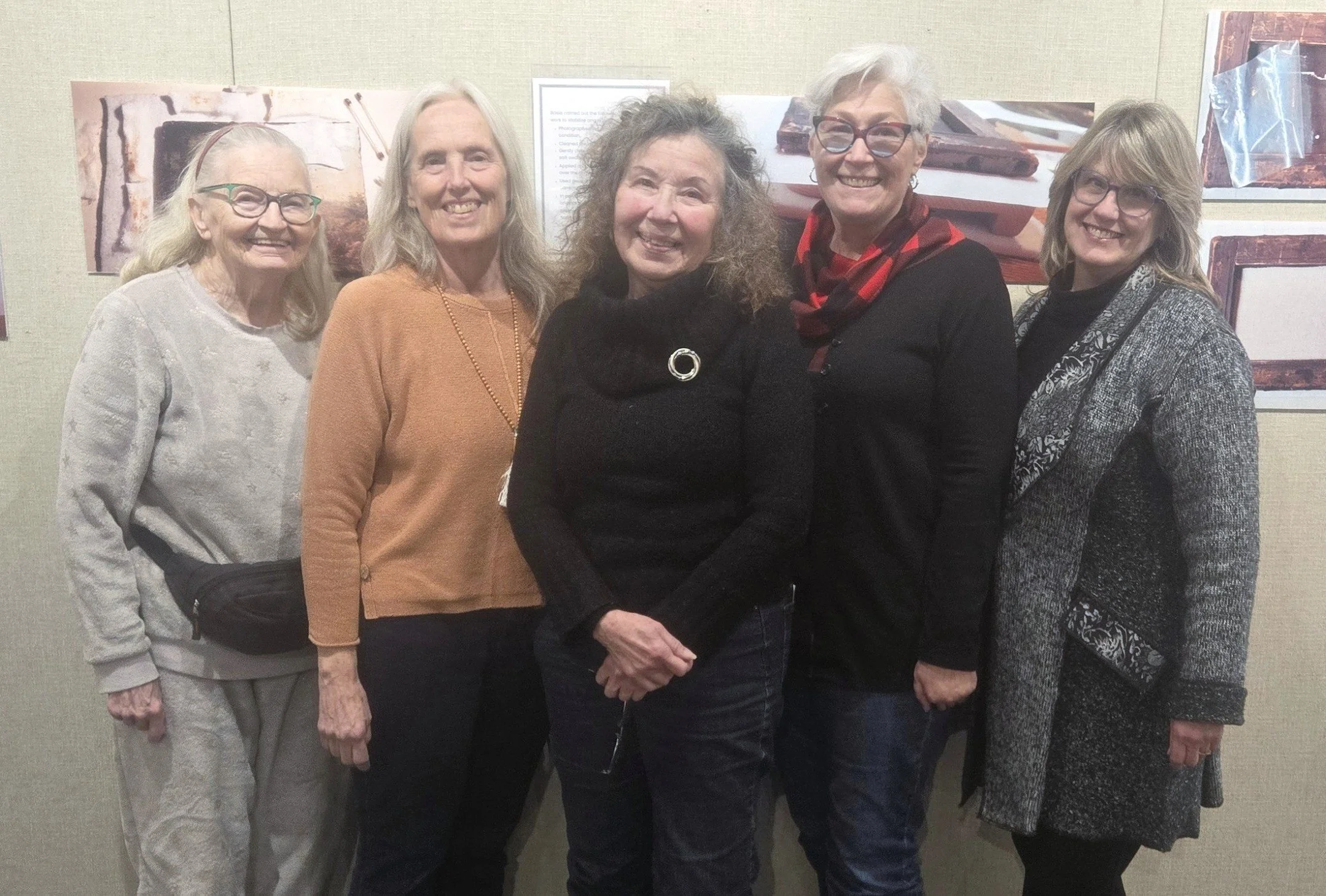
Creativity doesn't have a retirement age. Every time one of the Gallery’s senior artists sits down with a resident to create, they remind us that the desire to imagine, to connect, and to express ourselves is something we carry throughout our lives. That's what makes this program so special.
The Funding Gap: When Science and Reality Collide
Here is the difficult truth sitting alongside all this research: while the science shows the measurable, essential role of the arts in human health and community wellbeing, arts organizations across Canada are increasingly unable to sustain the programs that deliver it.
This Spring, the Gallery made the painful decision to cancel a planned summer arts camp. It wasn't a decision made lightly as this was never simply about cancelling an arts camp. It was about losing an opportunity to strengthen the health of our community. Every child who misses the chance to create misses more than an art lesson, they miss experiences that build skills while forming neural pathways and it is science that is now showing that these experiences matter in ways that extend far beyond the summer.
The funding landscape for arts organizations in Canada is genuinely precarious. Canada Council for the Arts, the country's primary public arts funder, delivered $325.6 million in grants in 2023-2024, but with federal spending reviews underway, the sector is bracing for cuts that could reach $54 million in program funding. The Canadian Heritage portfolio alone is projected to absorb up to $205 million in ongoing reductions by 2029–30.
For smaller community galleries, these pressures are not abstract. They show up as cancelled camps. As programs that cannot be launched. Artists that cannot be paid. As communities that cannot be reached.
There is a profound irony in this moment. At precisely the time that science is demonstrating, with rigorous evidence, that the arts are an essential mechanism for mental health, cognitive wellbeing, and community resilience, funding for the organizations that deliver those arts is being compressed.
Art Is Not a Luxury. It Never Was.
The neuroarts movement is making a scientific case that artists, gallery directors, music teachers, and community arts workers have been making intuitively for generations: that human beings are wired for art, that creative engagement is not a cultural nicety but a biological need, and that the communities that invest in it are healthier, more connected, and more resilient as a result.
At Kawartha Art Gallery, there is a conviction in every program offered, and a weight is felt every time a program is scaled back or canceled.
If you believe that art is essential, whether that means becoming a member, attending an exhibition, registering for a program, or simply walking through the Gallery’s doors, every act of engagement matters. And according to the science, it matters to your brain too.
What Can You Do?
This municipal election year, make the arts part of the conversation.
Attend all-candidates' meetings and ask public questions about support for rural arts and culture.
Encourage local organizations, businesses, and community leaders to advocate alongside you.
Vote for leaders who recognize that investing in the arts is investing in healthier people, stronger communities, and local economic vitality.
Consider a Kawartha Art Gallery Membership.
A Gallery membership is more than an annual contribution; it is an investment in the health and vitality of our community.
Membership helps sustain exhibitions, educational programs, outreach initiatives, and opportunities for artists of all ages while ensuring that creative experiences remain accessible to everyone.
As emerging research continues to demonstrate the positive impact of arts engagement on mental health, social connection, learning, and overall well-being, becoming a member is a meaningful way to help ensure these benefits remain available throughout our region.
Every membership strengthens the Gallery's ability to serve as a place where creativity, community, and connection flourish.
Your membership is not simply supporting an organization; it is an investment in community well-being.